The Parts Your Owner's Manual Forgot: A Real-World Replacement Timeline You Can Actually Use
Most drivers treat their owner's manual like a holy text. Change the oil every X miles, rotate the tires every Y months—got it. But flip through that booklet carefully and you'll notice something: a whole class of wear components barely gets a mention. They're not sexy enough for the quick-reference chart, but they fail on predictable schedules, and when they go, they take other parts with them.
This guide is about those parts. We pulled manufacturer data, talked to working technicians across the country, and put together a realistic timeline for components that quietly rack up damage while you're focused on the stuff that's easier to remember.
Spark Plugs: The Interval Gap Most People Get Wrong
Here's where things get confusing fast. Copper spark plugs need replacement around 30,000 miles. Platinum plugs push that to roughly 60,000. Iridium plugs—now standard on most vehicles made in the last decade—can go 90,000 to 100,000 miles. The problem is that a lot of drivers either replace them too early (wasted money) or assume their iridium plugs are immortal (engine misfires, rough idle, and a fuel economy drop that creeps up so gradually you don't notice it).
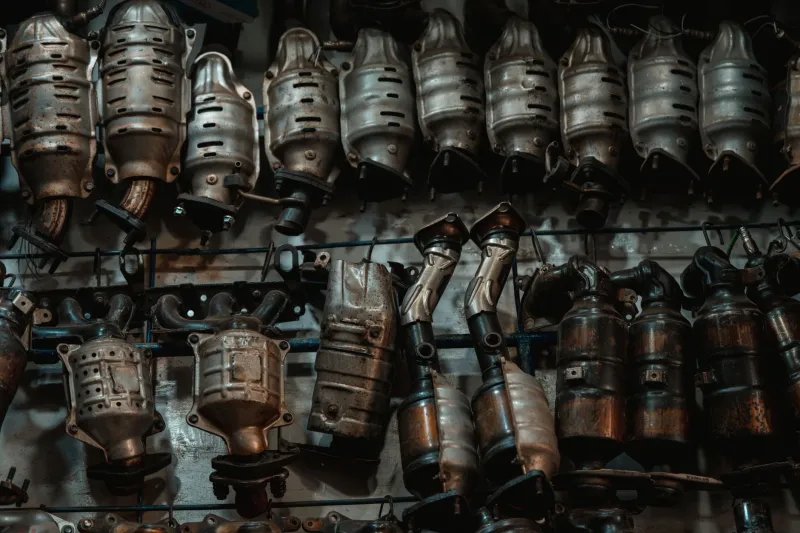
Misfiring plugs force your engine to compensate, which stresses your catalytic converter. Replace a $12 plug late and you might be looking at a $400–$1,200 catalytic converter job. On spark plugs, OEM is almost always worth it for vehicles still under warranty or with turbocharged engines. For naturally aspirated engines on older, high-mileage vehicles, quality aftermarket brands like NGK or Denso perform comparably at a lower price point.
Serpentine Belts: The One Part That Takes Everything Else With It
Your serpentine belt runs your alternator, power steering pump, air conditioning compressor, and water pump simultaneously. When it fails—and it will fail—it doesn't just strand you. It can kill your battery, overheat your engine, and leave your power steering dead in the middle of a lane change.
Modern belts are made from EPDM rubber, which doesn't crack visibly the way older neoprene belts did. That's actually a problem, because it gives drivers a false sense of security. Technicians recommend inspecting the belt at 60,000 miles and replacing it by 90,000–100,000 miles regardless of appearance. If your belt has never been changed and your odometer is approaching six figures, don't wait for a visual cue.
For most daily drivers, a quality aftermarket serpentine belt from Gates or Dayco is a completely reasonable choice. If you're driving a European luxury vehicle with tight tolerances, lean toward OEM.
Wheel Bearings: The Noise Nobody Investigates Until It's Too Late
Wheel bearings are one of those components where the warning signs are easy to dismiss. That low humming or grinding noise at highway speed? Drivers chalk it up to road noise, tire wear, or just the general personality of an older vehicle. By the time the bearing is genuinely failing, you've often got metal-on-metal contact that's been chewing away at your hub assembly for months.
Most wheel bearings are rated to last 85,000–100,000 miles under normal conditions. Salt exposure, aggressive driving, and off-road use shorten that window significantly. If you're in the Rust Belt—think Michigan, Ohio, Pennsylvania, upstate New York—expect to address bearings earlier, sometimes as low as 60,000 miles.
Ignoring a bad bearing risks wheel wobble, ABS sensor failure, and in extreme cases, complete wheel separation. OEM or OEM-equivalent bearings are strongly recommended here. This is a safety-critical component, and the price difference between a quality bearing and a budget one is rarely worth the risk.
Transmission Fluid: The Interval Your Dealer Doesn't Want to Tell You About
Some manufacturers list automatic transmission fluid as a "lifetime fill"—meaning they suggest it never needs changing under normal conditions. Most independent transmission specialists consider this one of the more misleading claims in the industry. "Lifetime" is engineered to mean the warranty period, not the life of your vehicle.
For most automatic transmissions, a fluid change every 30,000–60,000 miles is a reasonable real-world interval. Towing, stop-and-go city driving, and summer heat all accelerate fluid degradation. Dark, burnt-smelling fluid is a sign you're already behind schedule. Continuing to run degraded transmission fluid accelerates clutch pack wear and valve body damage—repairs that easily run into the thousands.
Use the fluid specification listed in your owner's manual. This is one area where using the wrong product—even a high-quality one—can cause more harm than good. OEM fluid or a licensed equivalent is the right call.
Cabin Air Filters: The Easiest Win You're Probably Skipping
Okay, this one won't strand you on the highway. But a clogged cabin air filter restricts airflow through your HVAC system, which forces your blower motor to work harder. Over time, that stress shortens the motor's lifespan. It also means you're breathing whatever has accumulated in that filter—pollen, dust, mold spores, exhaust particulates—every time you run the heat or AC.
Most manufacturers recommend replacement every 15,000–25,000 miles, or annually if you drive in dusty or high-pollen environments. It's a 10-minute DIY job on most vehicles and costs between $15 and $40 for a quality filter. Aftermarket options from brands like FRAM or Bosch are perfectly adequate for this application.
Building Your Own Maintenance Calendar
The honest truth is that manufacturer service intervals are designed around average conditions and liability concerns—not your specific driving environment. If you commute on salted roads in Cleveland, tow a trailer on weekends, or consistently drive in extreme heat, your wear timeline is compressed compared to someone doing gentle highway miles in San Diego.
The smartest approach is to use published intervals as a floor, not a ceiling. Keep a simple log of mileage and service dates for each of these components, and adjust based on how you actually use your vehicle. A trusted independent mechanic can help you audit where you stand if you've bought a used vehicle with incomplete service history.
At AGS Auto Parts, we carry OEM and quality aftermarket options for all of the components covered here. Whether you're tracking down the right iridium plugs for a turbocharged four-cylinder or sourcing a wheel bearing kit for a high-mileage truck, we've got the parts and the guidance to help you do it right the first time.