Eight Dollars That Decide Everything: Why the Bolt You Reuse Can Ruin the Repair

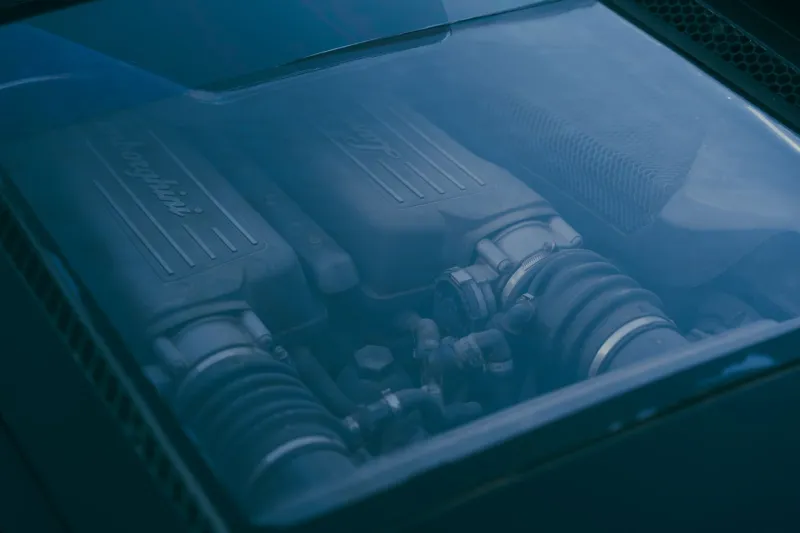
Photo by Photo by Mike Newbry on Unsplash on Unsplash
You just spent $340 on a head gasket set and you're about to reuse the old head bolts to save eight dollars. Stop. That eight dollars is the cheapest insurance in the entire job, and skipping it is how a weekend project turns into a comeback.
Fasteners get treated like afterthoughts — the thing you grab from a coffee can when one snaps. On modern engines and suspension systems, that attitude is expensive. Bolts are designed, specified, and often engineered to stretch exactly once. Here's how to think about them like a part, not a supply.
Your Bolt Has a Job Description
Every fastener on your vehicle is doing a specific job with a specific load. A valve cover bolt clamps a gasket and nothing more. A suspension cam bolt has to hold alignment under cornering loads and vibration for a hundred thousand miles. A head bolt has to maintain clamping force across a gasket while the engine cycles from 20 degrees to 220 degrees Fahrenheit, thousands of times.
Those are different jobs, which is why the bolts look different and cost different amounts. Treating them as interchangeable is where repairs go sideways.
Torque-to-Yield: The Bolt That's Already Spent
Torque-to-yield (TTY) bolts are engineered to stretch past their elastic limit during installation. That stretch is what generates even, consistent clamping force. The catch: once a TTY bolt has been tightened to spec, it stays stretched. It has done its one job.
Reusing one means you're starting with a bolt that's already deformed. Best case, it holds less clamp load than the gasket needs. Worst case, it snaps during final torque and you're pulling the head back off.
You'll find TTY bolts in head bolts, main cap bolts, rod bolts, some flywheel bolts, and a surprising number of suspension components. Two reliable clues: the service manual specifies a torque-plus-angle procedure (like 45 ft-lbs plus 90 degrees), or the bolt is marked as single-use in the procedure. Either one means new hardware, every time.
Grade Markings and Thread Pitch Aren't Decoration
Look at the head of a bolt and you'll usually find numbers or radial lines. Those markings tell you the tensile strength. A metric bolt with 8.8 on the head is a general-purpose fastener. A 10.9 is stronger. A 12.9 is stronger still, and more brittle. SAE bolts use grade markings — three lines for Grade 5, six for Grade 8.
Now the part people miss: grade is only half the spec. Thread pitch matters just as much. Substituting a coarse-thread bolt into a fine-thread hole will start, feel tight, and then strip or pull out under load. On aluminum engine and suspension components, that's a helicoil job you didn't budget for.
If you're replacing a bolt, match diameter, thread pitch, length, grade, and finish. All five. The hardware store bin will get you three of them.
Corrosion Is a Slow Sabotage
Undercoating season matters here. A bolt exposed to road salt for a decade loses cross-section to rust. It also loses the ability to hold torque predictably, because the threads are pitted. When you pull a suspension bolt and see heavy rust scaling on the shank, that bolt doesn't go back in. It gets replaced with a coated fastener — zinc-flake or geomet-coated, ideally — and a dab of anti-seize or threadlocker depending on the application.
Use anti-seize on fasteners that see heat and corrosion, like exhaust hardware and suspension bolts in salt-belt states. Use threadlocker where vibration is the enemy and the spec calls for it. Don't use both on the same bolt unless you enjoy guessing at torque values.
Reuse Rules, Zone by Zone
A quick field guide:
- Head bolts, main studs, rod bolts: replace. Always.
- Flywheel and pressure plate bolts: replace on most modern applications.
- Suspension camber and toe bolts, and any eccentric alignment hardware: replace if corroded, and never substitute a standard bolt.
- Subframe and cradle bolts: often single-use and often torque-to-yield. Check the procedure.
- Valve cover, oil pan, and bracket bolts: reusable if clean and undamaged.
- Exhaust manifold hardware: replace with new studs and nuts. Old ones round off.
When in doubt, the service manual's torque procedure is the final word. If it lists an angle after the torque value, it's a stretch bolt.
Where the Eight Dollars Bites
Failing to replace a TTY bolt doesn't usually fail on day one. It fails at 8,000 miles, as a coolant weep at the head gasket, or as a clunk over expansion joints because a suspension bolt lost clamp load. By then you've paid for the job twice, and the second time you're not saving anything.
That's the whole argument: a sixteen-dollar set of head bolts against a nine-hundred-dollar do-over. The math isn't close.
Build a Fastener Drawer That Actually Helps
Keep a small stock of the fasteners you actually use — Grade 10.9 metric flange bolts in common sizes, nylon-insert lock nuts, washers, and a thread pitch gauge. Buy a proper torque wrench and use it. Chase threads with a tap before installing new hardware into a dirty hole. Bag and label the bolts you remove from each assembly; a zip-top bag and a Sharpie have saved more projects than any tool in the box.
The part gets the credit. The fastener keeps it attached. Spend the eight dollars.