Your Transmission Fluid Is Trying to Tell You Something—Here's How to Listen
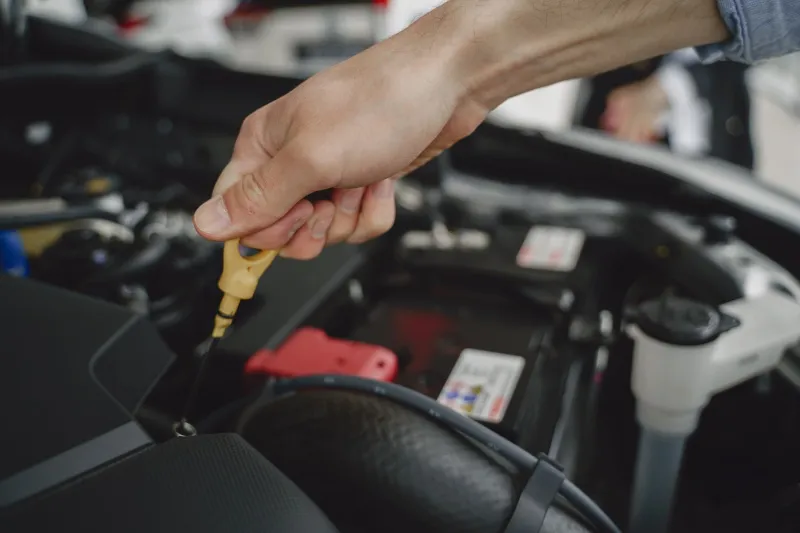
Most people check their transmission fluid exactly twice: when the shop tells them to and when something starts shifting weird. That's understandable—it's not the most exciting maintenance task, and the guidance out there tends to be pretty surface-level. "If it's dark, change it." "Red means good, brown means bad."
That's not wrong, exactly. It's just incomplete. Your transmission fluid is actually one of the best diagnostic tools you have access to without pulling anything apart. Here's how to get real information out of it.
Start with the Basics, But Don't Stop There
Fresh automatic transmission fluid (ATF) is typically a translucent red or pink. As it ages and works, it darkens. That much is common knowledge. But color alone doesn't tell you why it changed, and the reason matters a lot for deciding what to do next.
Darkening from normal heat cycling looks different from darkening caused by friction material breakdown, which looks different from contamination. Learning to distinguish between them can save you from either ignoring a serious problem or paying for a full flush when a targeted fix would do.
What Burnt Fluid Actually Means
If your fluid smells burnt—not just old, but genuinely acrid, like something scorched—that's a more urgent signal than dark color alone. Burnt ATF usually points to one of two things: overheating or excessive slippage.
Overheating can stem from a failing transmission cooler, a blocked cooler line, or a tow load that exceeded the vehicle's capacity. If your cooler is integrated with the radiator (common on older domestic trucks), a failing radiator can cause coolant to mix with transmission fluid, which is a whole separate problem we'll get to in a moment.
Excessive slippage happens when clutch packs or bands aren't engaging cleanly. The friction generates heat, which degrades the fluid faster than normal. If you're noticing delayed engagement or RPM flare during shifts alongside burnt-smelling fluid, the fluid change alone won't fix the underlying issue—you need to know why it's slipping.
The Milky or Foamy Problem
This one's serious. If your fluid looks milky, foamy, or has a pinkish, frothy consistency, you likely have coolant intrusion. In vehicles where the transmission cooler runs through the radiator, a failed cooler tank allows coolant and ATF to mix. Neither fluid does its job well after that, and the combination is actively damaging to seals and clutch material.
Don't confuse this with normal aeration, which can look slightly foamy if the fluid level is too high or the dipstick was checked right after the vehicle was running hard. Check at operating temperature with the engine idling in park, wipe the dipstick, reinsert, and check again. If it's consistently foamy or milky, investigate the cooler before doing anything else.
Metal Particles: The Diagnostic Goldmine
This is where fluid inspection gets genuinely useful. When you pull the dipstick or drain the pan, look at what's suspended in the fluid and what's settled at the bottom of the pan.
Fine, silvery metallic sheen in the fluid—sometimes called "glitter"—is normal in small amounts in high-mileage transmissions. Some friction material breakdown is expected. But if it's heavy, or if you can see actual flakes rather than a faint shimmer, internal wear is accelerating.
Chunky debris or identifiable pieces in the pan is a different story. That suggests component failure—a broken thrust washer, a spalled bearing, or a cracked bushing. A fluid change at that point is like sweeping debris under the rug. The pan needs to come off, the debris needs to be identified, and you need to understand what broke before deciding whether the transmission is salvageable.
The magnet in your drain plug (if your vehicle has one) is worth inspecting every service. Some metallic buildup is normal; a magnet coated in a thick black paste of fine metal particles is not.
Fluid Level Tells a Story Too
If your fluid level is consistently low between services and you're not seeing external leaks, you may have an internal leak past a worn seal. Common culprits include the front pump seal, the rear output shaft seal, or the pan gasket. Low fluid accelerates wear and heat buildup, so don't just top it off and move on—find where it's going.
Conversely, if the level is high, there's a chance coolant has entered the system (expanding the total fluid volume) or someone overfilled it. Overfilled transmissions aerate the fluid as the rotating components churn through it, which degrades lubrication quickly.
When a Fluid Change Actually Solves the Problem
Here's the honest answer: a fluid change is most effective as preventive maintenance and least effective as a repair. If you catch degraded fluid before symptoms appear, a fresh fill can extend the life of your transmission significantly.
If you're already experiencing symptoms—rough shifts, delayed engagement, slipping—a fluid change might temporarily improve things by removing debris and restoring some friction properties, but it rarely fixes the root cause. And on very high-mileage transmissions that have never been serviced, a full flush can sometimes dislodge varnish deposits that were actually helping worn components seal. In those cases, a partial drain-and-fill is often the safer approach.
The Right Fluid Matters More Than Most People Think
Not all ATF is interchangeable. Using the wrong spec—even a "universal" fluid that claims broad compatibility—can cause shift quality issues and accelerate wear on friction materials designed for a specific fluid chemistry. Always verify the OEM specification for your vehicle and match it. If you're unsure, the part number lookup tools at AGS Auto Parts can point you to the right fluid for your exact application.
Your transmission is one of the most expensive components on your vehicle to replace. The fluid inside it is one of the cheapest things to maintain. Read it carefully, and it'll tell you a lot before things get expensive.