Same Part, Three Boxes: Decoding the Aftermarket Brand Game

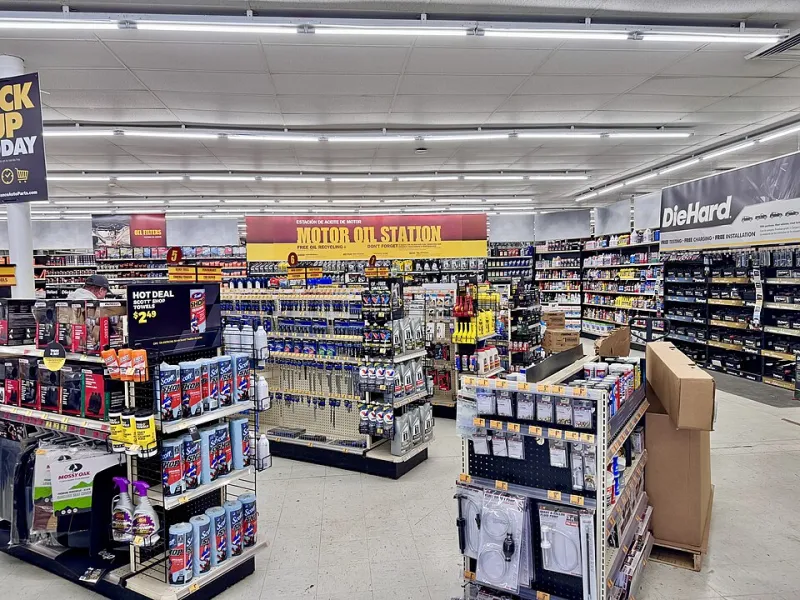
Photo: Mitch Barrie from Reno, NV, USA, CC BY-SA 2.0, via Wikimedia Commons
You've been here before. You need an alternator for your F-150, and the catalog offers you three options: a house brand at $95, a mid-tier name at $180, and the premium label at $310. Same part number. Same photo. Three prices.
Nobody at the checkout explains the difference, because in some cases there barely is one—and in others, the cheap one will strand you in a Walmart parking lot in February. Here's how to tell which is which.
The Three-Tier Reality
Most aftermarket categories sort into three tiers, and understanding them solves half the confusion:
Economy tier is built to a price. Expect thinner castings, re-manufactured internals dressed as new, or electrical components with the cheapest available regulator and brushes. It'll usually work—out of the box, for a while. The warranty might be 90 days, and the fine print often covers replacement, not the labor of installing it twice.
Standard tier is where most daily drivers belong. These are the volume sellers from established manufacturers—solid quality, sane warranties, and pricing that reflects actual engineering rather than brand advertising.
Premium tier is either genuine over-engineering or a nicer box around the same standard-tier part. Both exist. The trick is knowing which one you're holding.
Who Actually Makes What
Here's the part the industry doesn't advertise: a surprisingly large share of the aftermarket flows through a handful of actual manufacturers. The brand on the box is frequently a marketing company, not a factory.
Some patterns worth knowing:
- Rotating electrical (alternators, starters) has a small number of true remanufacturers supplying many labels. The premium versions often differ only in the bench-testing and internal component quality.
- Brake friction is dominated by a few major manufacturers, but the economy labels are frequently made by separate, unrelated factories—this is a category where tier genuinely matters, because pad compound is chemistry you can't see.
- Filters range from legitimately excellent house brands to economy units with less filter media and cheaper anti-drainback valves. Cut one open and the difference is obvious.
- Suspension and steering is where casting quality and heat treatment separate the tiers most visibly.
The honest move when comparing brands: search the manufacturer's part number stamped on the old component. If two brands share it, you've found the same part in different packaging. If they don't, you're comparing actual engineering—and the price gap might be justified.
When Paying Up Is Worth Every Dollar
Some categories punish cheapness faster than others. Spend the extra money on:
- Brake pads and rotors — stopping distance is not a savings category
- Timing components and water pumps — failure means engine damage, not just inconvenience
- Fuel pumps and ignition coils — the return rate on bottom-tier electrical is legendary
- Anything buried behind 4 hours of labor — if replacing it twice costs a Saturday, buy the one that works once
When the Cheap One Is Fine
Conversely, don't overpay for:
- Cabin and engine air filters (fitment matters more than brand)
- Body hardware—clips, trim fasteners, mirrors
- A secondary vehicle with modest annual mileage
- Any part where the premium option shares a casting number with the standard one
Read the Warranty Like a Spec Sheet
A warranty is a manufacturer's confidence in writing. A lifetime warranty on a ball joint from a company that's answered phones since 1985 means something. A "lifetime" warranty from a brand that appears and disappears on Amazon every eighteen months means a nice sentence on the box.
Also check whether the warranty covers parts only or parts and labor. On a labor-heavy job, that distinction can be worth hundreds of dollars.
How We Sort the Shelf for You
This is the whole reason AGS Auto Parts organizes its catalog the way it does. Instead of fifty mystery listings, you get clearly labeled quality tiers, the actual manufacturer behind each part, honest warranty terms, and a support team that will flat-out tell you when the economy option is the smart buy. Sometimes the answer is "spend the extra $90." Sometimes it's "the $95 one is the same part." Either way, you deserve to know before the box arrives—not after.
The aftermarket isn't a scam. It's just a room full of boxes with nobody explaining what's inside them. Now you know how to look.